

Step-by-step guide to the lowering opposite
Maximize effectiveness: Tips for patients and practitioners
Step-by-step guide to the lowering opposite
Maximize effectiveness: Tips for patients and practitioners

1. Step-by-step video on how to do the lowering opposite

2. How to perform the lowering opposite? Follow these instructions:


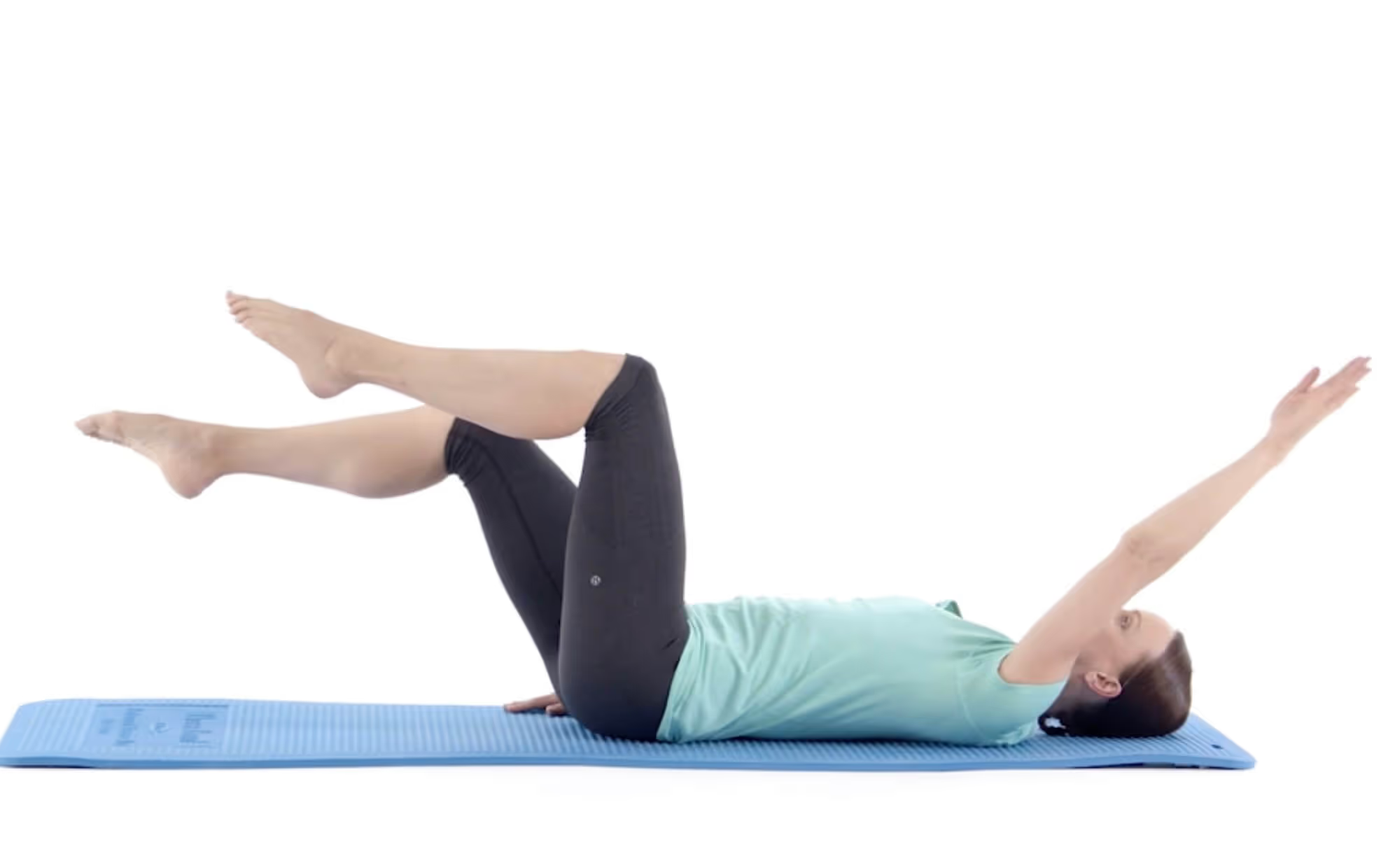

%20(1).avif)
3. About the lowering opposite
- Lowering exercises, also known as eccentric exercises, involve the muscle lengthening under tension.
- This can be done by controlling the downward phase of a lift, such as the lowering phase of a bicep curl.
- Lowering exercises have been shown to be effective in promoting muscle growth, increasing strength, and improving joint stability.
- They are also useful in rehabilitation programs for individuals recovering from injuries.
- However, it is also important to note that eccentric exercises can cause more muscle damage than concentric exercises and therefore may lead to more soreness after the workout.
- As a result, it is recommended to start with lower weight and higher reps and to increase weight gradually when doing eccentric exercises.
4. Benefits of lowering opposite
Here are some potential benefits of performing this exercise:
- Increases muscle mass and strength
- Improves joint stability
- Can lead to greater muscle activation compared to concentric-only exercises
- Can help reduce muscle imbalances by targeting the lengthening phase of muscle movement
5. FAQ on lowering opposite


Lowering exercises, also known as eccentric exercises, involve the muscle lengthening under tension. This can be done by controlling the downward phase of a lift, such as the lowering phase of a bicep curl.
Lowering exercises have been shown to be effective in promoting muscle growth, increasing strength, and improving joint stability. They are also useful in rehabilitation programs for individuals recovering from injuries.
It is recommended to start with lower weight and higher reps and to increase weight gradually when doing lowering exercises. It's also best to consult with a trainer or physical therapist before starting an eccentric exercises program.
Lowering exercises can cause more muscle damage than concentric exercises, leading to more soreness after the workout, also known as DOMS (Delayed Onset Muscle Soreness).
Yes, Lowering exercises can be included in a regular workout routine as part of a progressive overload plan, but it's important to incorporate them gradually and give enough time for recovery.

